
 Visit our group of companies

Your 1-Stop Supplier & Installer of all surfaces
Visit our group of companies
Your 1-Stop Supplier & Installer of all surfaces
September 25, 2026
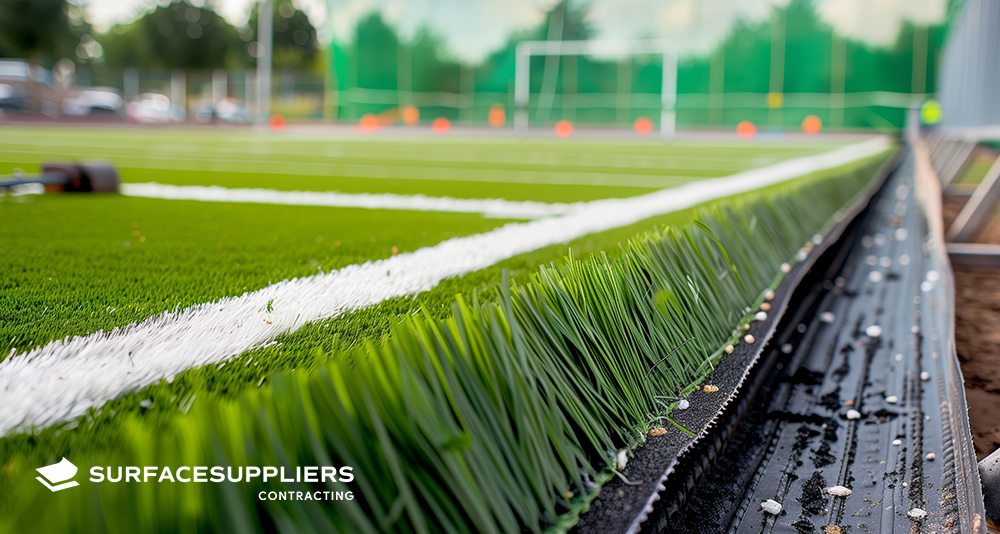
A synthetic turf field that floods after moderate rainfall is not just a scheduling inconvenience. It is a maintenance cost that compounds, a safety issue for athletes, and almost always a sign that the base beneath the turf was not built to handle the conditions placed on it. Sports field drainage systems are not an afterthought to be addressed once a field is complete. They are the foundation that determines whether everything above ground functions correctly.
Most planning conversations about sports fields focus on the surface layer, the fiber type, the infill material, and the line markings. The drainage and civil base work beneath all of that receives less attention during the design phase and tends to generate the most expensive problems after installation is complete.
A properly engineered sports field drainage system involves multiple layers working together. At the bottom is the subgrade, the compacted native soil that carries the entire load of the field above it. On top of that is typically a layer of crushed aggregate, sized specifically for both structural support and drainage flow. Within or beneath that aggregate layer, perforated drainage pipes collect water and carry it to a collection point or connection to the site stormwater system.
The aggregate layer is not a generic material choice. The gradation, which refers to the size distribution of the stone particles, determines how quickly water moves through the layer and how well the layer resists compaction under repeated athletic loads. Using the wrong aggregate specification is one of the most common causes of drainage failure in fields that looked well-constructed on paper.
Above the aggregate and drainage pipe layer, a layer of clean sand or a sand-aggregate mix is typically used to create a stable, even surface for the turf or natural grass to root into. Each of these layers needs to be installed and compacted in the right sequence to achieve the design drainage rate.
Before any drainage layer is installed, the subgrade needs to be excavated, shaped, and compacted to the correct tolerances. Sports field excavation services involve removing existing material to the required depth, which for a synthetic turf field typically ranges from 12 to 18 inches below the finished surface, depending on the design drainage rate and local conditions.
Laser grading is used to achieve precise slope across the field surface. As we detail in our guide on why ground preparation and drainage matter most, most field designs specify a 0.5 to 1.0 percent cross slope, enough to move surface water to the perimeter drainage channels without creating a noticeable grade that affects play. Getting this wrong at the subgrade level means the error carries through every layer above it.
Perimeter drainage channels collect surface runoff from the field edges. These need to connect properly to the site stormwater infrastructure. If the connection point is undersized or the elevation difference between the field drain outlet and the stormwater system is insufficient, even a well-built internal drainage layer will not perform correctly under heavy rainfall.
Field drainage failures usually trace back to one of a few specific causes. Inadequate drainage pipe depth or spacing means the system cannot move water fast enough under peak rainfall conditions. Wrong aggregate gradation means the drainage layer compacts over time and loses its permeability. Poor perimeter drainage design means water backs up at the edges even when the internal system is working.
Clogging is a long-term failure mode that is often overlooked in initial design. Fine particles migrating down from upper layers gradually block drainage pipes and aggregate voids over years of use. Geotextile fabric used correctly as a separator between layers slows this process considerably. Used incorrectly or omitted entirely, clogging becomes a predictable outcome.
Fields that were built to a lower cost specification often show drainage problems within three to five years of installation. Fixing them after the fact means excavating and rebuilding sections of the base, which costs significantly more than specifying the system correctly during the initial sports field base construction.
A soccer field used by a community club two evenings a week has different drainage requirements than a multi-sport field used by a school district every day, including during rainfall. High-use fields need higher drainage capacity built into the base design, because the turf and base layers receive more compaction over time.
Field type also affects drainage design. Baseball and softball infields use different surface materials than turf fields and have specific drainage requirements around the mound and home plate areas. Football and rugby fields with synthetic turf require drainage systems that can handle consistent heavy loads across the full surface.
Sports field base construction for a dedicated field should always include a drainage design review that accounts for local rainfall intensity data, not just average annual precipitation. A system designed for average conditions may not be adequate for peak storm events in your specific location.
At Surface Suppliers, we build comprehensive sports field drainage systems and complete field infrastructure from excavation through to finished surface installation across Canada. Our work covers civil preparation, drainage engineering, aggregate layering, and synthetic turf installation for fields of all types and sizes.
If you are planning a field project and want to discuss the base requirements for your site, contact us at 604-805-9494 to speak with our expert team.
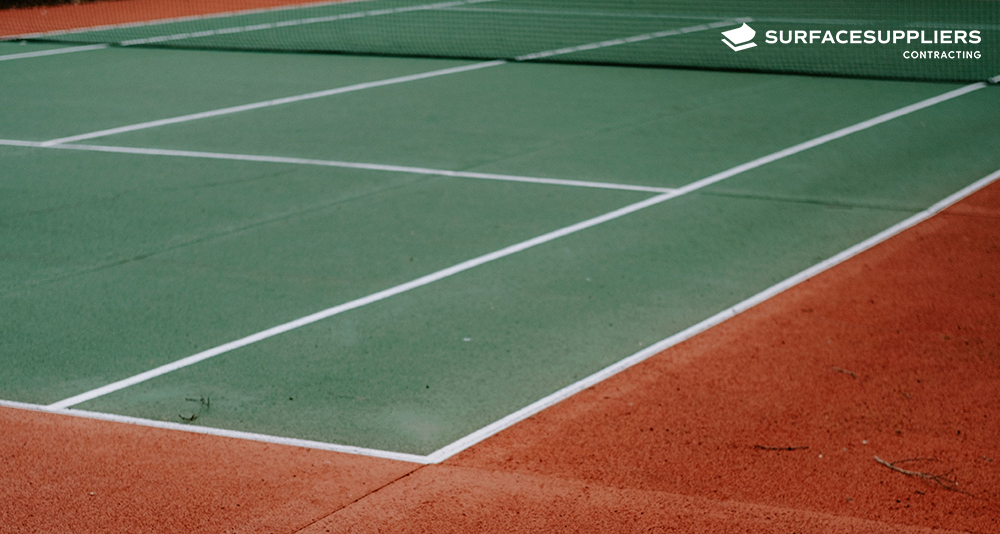
The most expensive sports field problems are almost never the fault of the surface material. The fiber quality, the infill specification, the line markings—those are rarely where things go wrong. Th...

Most sports surface projects involve three or four separate trades: excavation, drainage, turf or court installation, and finishing work like fencing or lighting. When those trades are separate contractors, coordination gaps between them are where projects run late and problems get missed. We run all of it under one crew and one project timeline.
Built for Canadian Winters
Freeze-thaw cycles are what actually break sports surfaces in Canada – not the turf itself. A base that traps water will heave, crack, and shift every winter regardless of what’s installed on top. We engineer sub-base and drainage systems specifically for regional freeze-thaw and snowmelt conditions, so fields and courts hold their shape through winter instead of needing re-leveling every spring.
Where We Work
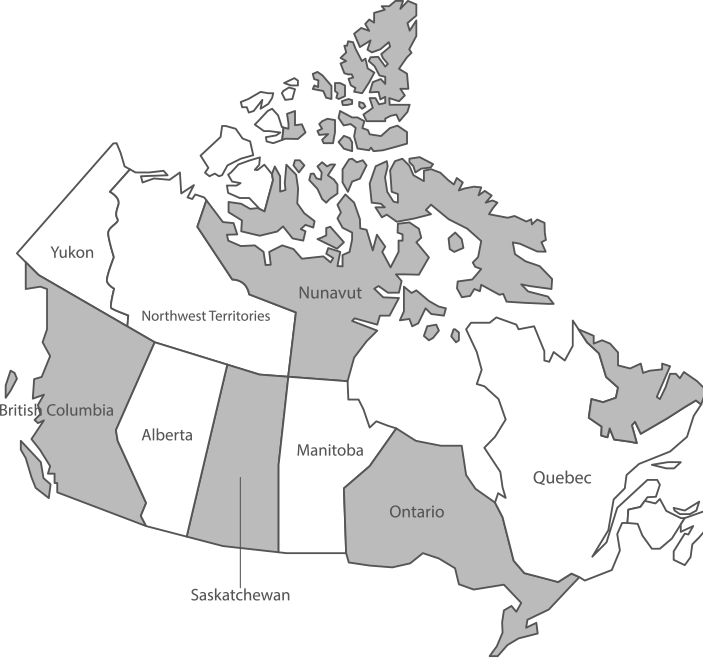
We operate project teams across seven regions of Canada, with dedicated crews active in these cities.
Winnipeg
Brandon
Quebec
Montreal
Quebec City
Laval
Sherbrooke
Gatineau
Atlantic Canada
Halifax
Moncton
Charlottetown
St. John’s
Ontario
Toronto
Mississauga
Brampton
Ottawa
Hamilton
London
Kitchener
Windsor
Niagara
Kingston
Saskatchewan
Regina
Saskatoon
Prince Albert
Territories
Yukon
Northwest Territories
Nunavut
Ready to get started? Every great project begins with a solid foundation. Request an onsite visit, and one of our experts will come to your property to assess the terrain, take precise measurements, and discuss the best drainage and surfacing options for your specific space.
We want you to see and feel the quality of our surfaces firsthand. Use this form to let us know which products you’re interested in, and we’ll get a sample pack or technical spec sheet headed your way.
If you are a synthetic turf installer or interested in becoming one, get in touch with us today and become an exclusive carrier!
L et’s bring your vision to life. Whether you need a 3D rendering of a new community park or a feasibility study for a professional sports stadium, our design team is here to help. Fill out the details below to start a conversation about your project’s potential.